

Buccal Fat Removal
What Is Buccal Fat Removal?
Buccal fat removal (pronounced “buckle fat removal”) is a surgical procedure that slims the lower cheeks by removing the buccal fat pads, two pockets of fat located deep inside each cheek. The procedure is also known as buccal lipectomy, buccal fat pad removal, or bichectomy. Unlike the fat just beneath the skin, buccal fat pads sit deep within the face, surrounded by muscle. They do not shrink with diet or exercise, which is why patients with an otherwise lean body can still carry fullness in the lower face.
The buccal fat pads sit deep inside the cheeks, beneath the muscles used for chewing. They are completely separate from the fat just under the skin. This is an important distinction: buccal fat pads usually do not respond to diet or exercise. In most patients, no amount of weight loss, cardio, or facial exercises will reduce them. Patients who maintain a healthy weight and a lean body but still notice fullness or roundness in the lower cheeks are almost always seeing the effect of prominent buccal fat pads.
When buccal fat pads are appropriately reduced, the cheekbones become more visible, the lower face appears slimmer, and the soft roundness that can make the face look heavier than the rest of the body is addressed. The change is structural and permanent.
Buccal fat removal is not the same as cheek liposuction. Liposuction removes fat from just beneath the skin. Buccal fat sits much deeper and requires a completely different surgical approach, performed entirely through the inside of the mouth. The two procedures target different structures and serve different purposes, though in some patients both may be appropriate.
The procedure is performed through small incisions on the inner cheek surface. There are no external cuts and no visible scarring. Under local anesthesia, the fat pad is accessed, carefully delivered through the opening, and reduced. For most patients, the procedure takes less than one hour. Recovery is manageable, and the results, once swelling has resolved, are permanent.
Structure first. Understanding the anatomy is what separates predictable outcomes from avoidable complications.

Who is a Candidate for Buccal Fat Removal?
Not everyone is a candidate for buccal fat removal, and that is a good thing. This procedure works because it is selective. The results are predictable when the right patient is matched with the right surgical plan. That evaluation begins at consultation.
Two factors determine candidacy. The first is the presence of fullness or roundness in the lower face caused by the buccal fat pads. Some patients carry significant volume. Others carry only a modest amount. Even a small degree of buccal fat prominence can produce a meaningful difference after removal, particularly for patients who desire a sharp, contoured aesthetic.
The second factor is the most important: cheekbone structure.
Think of the cheekbones as the foundation of the face. They provide the skeletal framework that allows the lower face to appear sculpted, youthful, and defined after buccal fat is reduced. Without that foundation, removing buccal fat can leave the lower face looking gaunt or prematurely aged.
This is why cheekbone evaluation is central to every consultation. Patients with naturally prominent cheekbones, whether they are slim, average weight, or heavier, are typically strong candidates. Body weight does not determine candidacy. Anatomy does.
What if you have the fullness, but not the foundation (no high cheekbones)?
In that case, the foundation is built first. Cheekbone enhancement, usually with a volumizing filler, creates the structural support the face needs. Once that framework is in place, buccal fat removal can be performed safely and with a predictable outcome. The goal is always to achieve the result the patient desires for their face, not simply to perform the procedure they request.
There are four patient profiles for whom complete buccal fat pad removal is the appropriate and correct approach:
- Models, high-fashion, and editorial patients who require a chiseled, architectural midface consistent with a high-fashion aesthetic standard.
- Overweight patients maintaining stable weight, where partial removal produces no perceptible result due to the surrounding tissue volume.
- Patients with thicker skin, where partial removal is visually masked and does not translate into visible surface definition.
- Patients with very prominent, well-defined cheekbones, where complete removal maximizes the sculpting effect and reveals the underlying skeletal structure.
The question of how much to remove, partial or complete, is determined entirely by the patient’s anatomy and aesthetic goals. Anatomy dictates the plan.
Who is not a candidate for buccal fat removal?
- Patients with lower face fullness but no prominent cheekbones who decline cheekbone enhancement (filler augmentation or other structural augmentation) prior to surgery. Without the foundation, this procedure should not be performed.
- Patients seeking trend-driven results without a clear anatomical indication.
- Patients who present with facial fullness that originates from subcutaneous fat or skin laxity rather than the buccal fat pad itself.
If this is not the right procedure for you, Dr. Mesa will tell you that at your consultation. The consultation exists to determine fit, not to confirm a booking.
Benefits of Buccal Fat Removal
When performed correctly, in properly selected patients, buccal fat removal produces meaningful, lasting changes to facial structure and proportion. The benefits are most clearly understood in anatomical and practical terms rather than aesthetic trends.
Structural and Aesthetic Outcomes
- A more sculpted midface with enhanced cheekbone visibility
- A slimmer lower facial contour, reducing the rounded appearance of the lower cheek
- Improved facial proportions consistent with the V-shaped facial structure, a standard of facial balance recognized across cultures and validated in aesthetic research
- Results that improve over time as mild post-operative swelling gradually resolves over several weeks to months
Procedural Advantages
- In Dr. Mesa’s practice, the procedure is performed entirely under local anesthesia. No general anesthesia, no IV sedation, and no “twilight” sedation required.
- No external incisions, no visible scarring
- Procedure time under one hour
- Most patients return to work within one to two days
- The results are permanent.
The results of buccal fat removal are permanent. Once the buccal fat pad is removed, it does not grow back. For patients who have struggled with a round or full lower face that no amount of diet or exercise has changed, knowing the result is a one-time, lasting correction is what matters most.
Precision determines outcome. The benefits described here are achievable in the right patient, performed with the right technique, by a surgeon with the judgment to know the difference.
How Is Buccal Fat Removal Performed?
Buccal fat removal is performed entirely inside the mouth. There are no external incisions, no visible scars, and no hospital admission required. In Dr. Mesa’s practice, the procedure takes place at one of his office-based operating rooms, a fully equipped surgical suite designed for facial procedures of this kind.
Anesthesia: A Key Distinction
Dr. Mesa performs buccal fat removal under local anesthesia alone, without oral sedation, intravenous (IV) sedation, or general anesthesia. This is not the standard approach at most practices. The majority of surgeons require patients to be sedated or placed under general anesthesia, which means arranging for a chaperone or companion to be present for safe discharge, coordinating transportation home, taking additional recovery time, and adding the cost of an anesthesia team.
Under Dr. Mesa’s technique, patients remain fully comfortable throughout the procedure, drive themselves home afterward, and avoid any sedation-related recovery period. For patients who prefer it, general anesthesia or IV sedation is available, but it is rarely necessary. Local anesthesia is sufficient, and it keeps the experience private, efficient, and low-disruption.
The Procedure, Step by Step
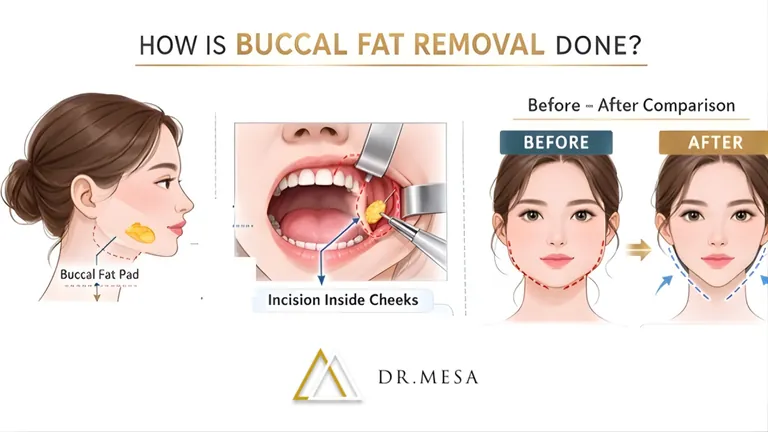
Once the local anesthesia takes effect, the procedure proceeds as follows:
- A small retractor is placed to gently keep the mouth open and allow access to the inner cheek.
- A small incision is made inside the mouth near the second upper molar. The incision is a few millimeters in length.
- The incision is carefully opened to expose the buccal fat pad, which sits between the masseter muscle and the soft tissue of the cheek.
- The buccal fat pad flows freely through the incision once accessed. No forceful extraction is required.
- A precise amount of fat is removed, determined entirely by the patient’s anatomy and stated goals. Anatomy dictates the plan.
- The incision is closed with dissolvable sutures that do not require removal.
The full procedure, from anesthesia administration to closure, is completed in under one hour.
Oral incisions heal reliably and quickly. Because no skin is broken, there is no visible scarring at any stage of recovery. The inside of the cheek heals within days, and patients return to normal daily activities the following day in the vast majority of cases. Dr. Mesa recommends avoiding vigorous exercise for two weeks after the procedure to prevent exercise-induced swelling and allow healing to progress smoothly.
When performed correctly, buccal fat removal is a controlled, predictable procedure. Details define results. The outcome depends on anatomical understanding and the judgment applied during removal. Volume taken cannot be replaced. Precision determines outcome.
Recovery After Buccal Fat Removal
Recovery from buccal fat removal is among the most manageable of any facial procedure. Most patients who work from home return to work the following day. Patients who need to be present in the workplace typically return within two to three days. There is no visible bruising in the vast majority of cases, and the recovery period does not interfere with normal daily function for most people.
That said, understanding what to expect, week by week, allows patients to plan appropriately and interpret what they are seeing in the mirror accurately.
Recovery Timeline
Day 0
Day of the Surgery
Some mild swelling is normal on the day of the procedure. Patients may notice the cheeks appear slightly fuller immediately after, which is a normal inflammatory response to the incision and the injected local anesthesia. This is temporary. Sleeping with the head elevated on the first night is recommended.
Days 1 to 3
Days 1 to 3
Swelling during the first one to three days can be significant, similar to what patients experience after wisdom tooth removal. This is expected and temporary. Patients who follow Dr. Mesa’s post-operative recommendations, including head elevation, compression, and activity or exercise restriction, typically see the swelling subside significantly by post-operative day two or three. A light compression bandage is recommended overnight only on the night following the procedure to help reduce swelling.
Week 1
1 Week After
For approximately 90% of patients, swelling subsides significantly within the first week. Most patients return to work or school the next day without issues. Bruising is extremely rare and, when it occurs, is typically minor. Pain during this period is minimal, and most patients describe the recovery as virtually pain-free, managing any discomfort with over-the-counter medication only. During weeks 1 and 2, you will generally look as though nothing happened and will not yet see visible results.
For the remaining 10% of patients, swelling may be more pronounced and can persist for up to one week. Icing the area until the swelling resolves is recommended. This is a normal variation, not a complication.
Week 3
3 Weeks After
The early results of the procedure start to become visible in the 3rd week after surgery. As residual swelling resolves, the initial contour changes begin to emerge, and patients notice the midface appearing slimmer and more refined.
Month 3 and Beyond
3 Months and Beyond
Final results typically settle in fully around the three-month mark. At this point, the outcome reflects the permanent anatomical change. Some patients see even better results by month four; after that, these are the results that tend to be long lasting
Post-Operative Instructions
Following the procedure, Dr. Mesa’s patients are given these specific post-operative instructions to support healing:
- Sleep with the head elevated for the first night
- Wear the provided compression bandage on the first night
- Brush the teeth as usual, but carefully to avoid causing discomfort at the incision site.
- Rinse with medical-grade mouthwash after every meal for the first week to keep the incision site clean
- Avoid vigorous exercise for one to two weeks
- Food restrictions: based on Dr. Mesa’s experience, the only restrictions that his patients have to follow are not to eat anything that is hot in temperature, like hot soup, hot coffee, hot tea, the day of the surgery, because the numbness inside the mouth can cause some burning. Otherwise, they can eat anything, like hamburger, pizza, Dorito, mac and cheese, or salad. The next day after the surgery, they can continue eating any temperature food.
One follow-up appointment with Dr. Mesa is scheduled as part of the standard care protocol, usually 10 to 12 weeks after the procedure. This visit allows careful monitoring of the healing process and confirmation that the outcome is progressing as planned.
Buccal Fat Removal Cost
Cost is a practical consideration, and the range across the United States is wide. Understanding what drives that range allows patients to evaluate quotes accurately and recognize what they are, or are not, paying for.
The price of buccal fat removal is personalized and discussed during your consultation. It can vary based on several factors such as the surgical setting, anesthesia approach, and the complexity of your case. Every patient’s anatomy is unique, so treatment plans are tailored individually. For this reason, Dr. Mesa does not list pricing online, as an in-person evaluation is the most reliable way to determine the details of your procedure. Financing options are available through CareCredit, Alphaeon Credit, and PatientFi
Facility Type
1. Facility Type
Procedures performed in hospital operating rooms carry higher facility fees than those performed in private, office-based surgical suites. A hospital-based setting adds overhead that is passed directly to the patient. An office-based surgical suite, when properly equipped and staffed, delivers the same level of care without the institutional cost structure.
Anesthesia Type
2. Anesthesia Type
General anesthesia or IV sedation requires a separate anesthesiologist, adding approximately $1,000 to $2,000 to the total cost of the procedure.
Local anesthesia, when appropriate and properly administered, eliminates this fee entirely. The procedure itself is unchanged. The patient simply remains comfortable through a different mechanism, one that also allows them to leave independently and recover without sedation-related delay.
Dr. Mesa performs buccal fat removal under local anesthesia in all his office-based surgical suites. This approach keeps the total cost more accessible than hospital-based procedures requiring general anesthesia, without any compromise to the procedure itself.
Surgeon Experience and Specialization
3. Surgeon Experience and Specialization
Surgeons who operate exclusively plastic surgery of the face, who have performed this procedure consistently over many years, and who serve a discerning patient population typically command fees that reflect that positioning. This is a market reality, not a marketing claim. Volume of cases and depth of focus within a specialty inform the judgment applied to each individual procedure. That judgment is not interchangeable.
Insurance and Financing
Buccal fat removal is a cosmetic procedure and is not covered by insurance under any circumstances.
For patients who prefer to manage the cost over time, financing is available through CareCredit, Alphaeon Credit and PatientFi, three widely used medical financing platforms. The practice accepts payment by all major credit cards, cash, and cashier’s checks; personal checks are not accepted
Evaluating Cost in Context
Many patients considering buccal fat removal also benefit from cheekbone enhancement, which can involve additional costs for cheekbone fillers. In some cases, cheekbone filler is necessary to become a candidate for buccal fat removal by first creating the structural foundation the face needs; in other cases, patients are already good candidates but choose cheekbone enhancement to further sharpen their result, especially if they are aiming for a more celebrity or supermodel-type look. Because the ideal plan, and therefore the total investment, depends on each patient’s anatomy and goals, the overall cost of treatment is determined during a personal consultation with Dr. Mesa.
To receive a customized treatment and fee plan, patients are encouraged to schedule a consultation using the contact form or by calling the office directly.
Verified patient Reviews


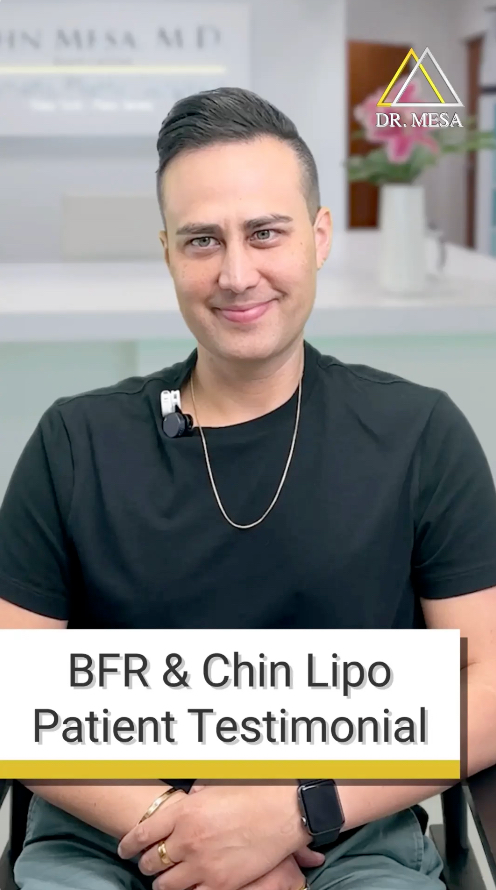
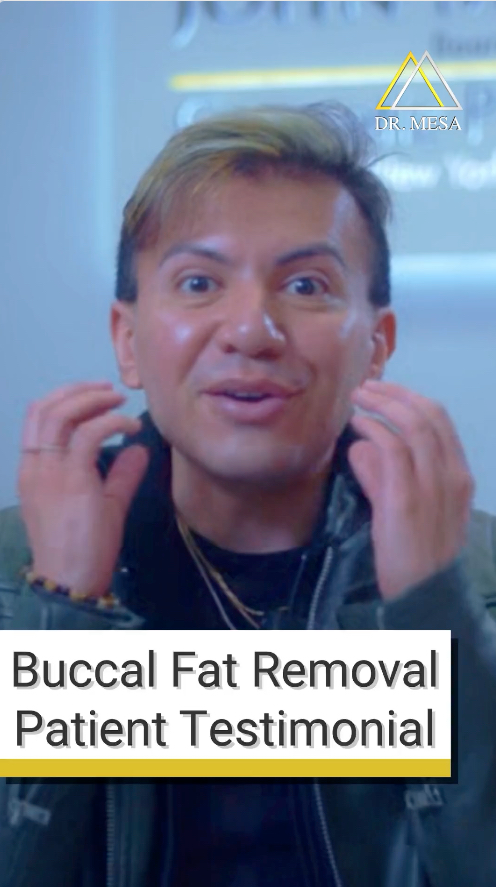
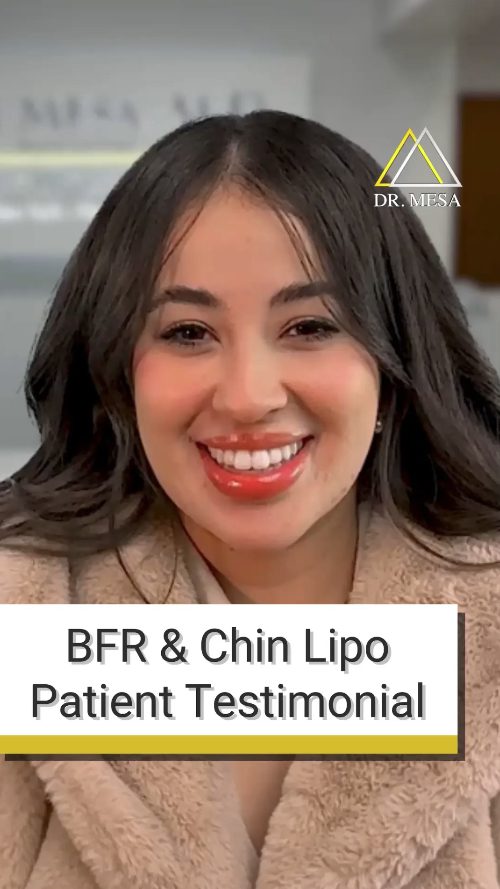
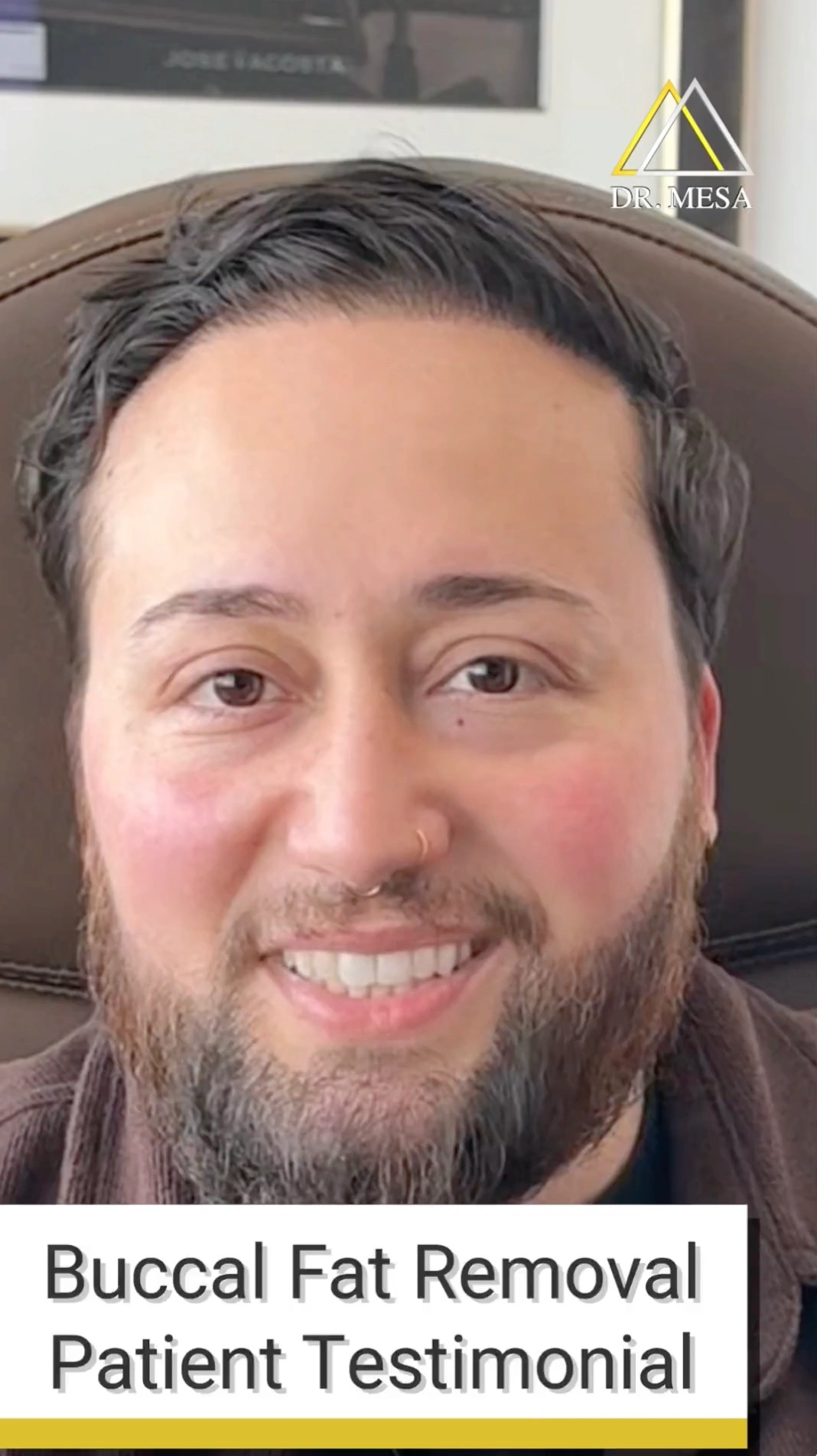

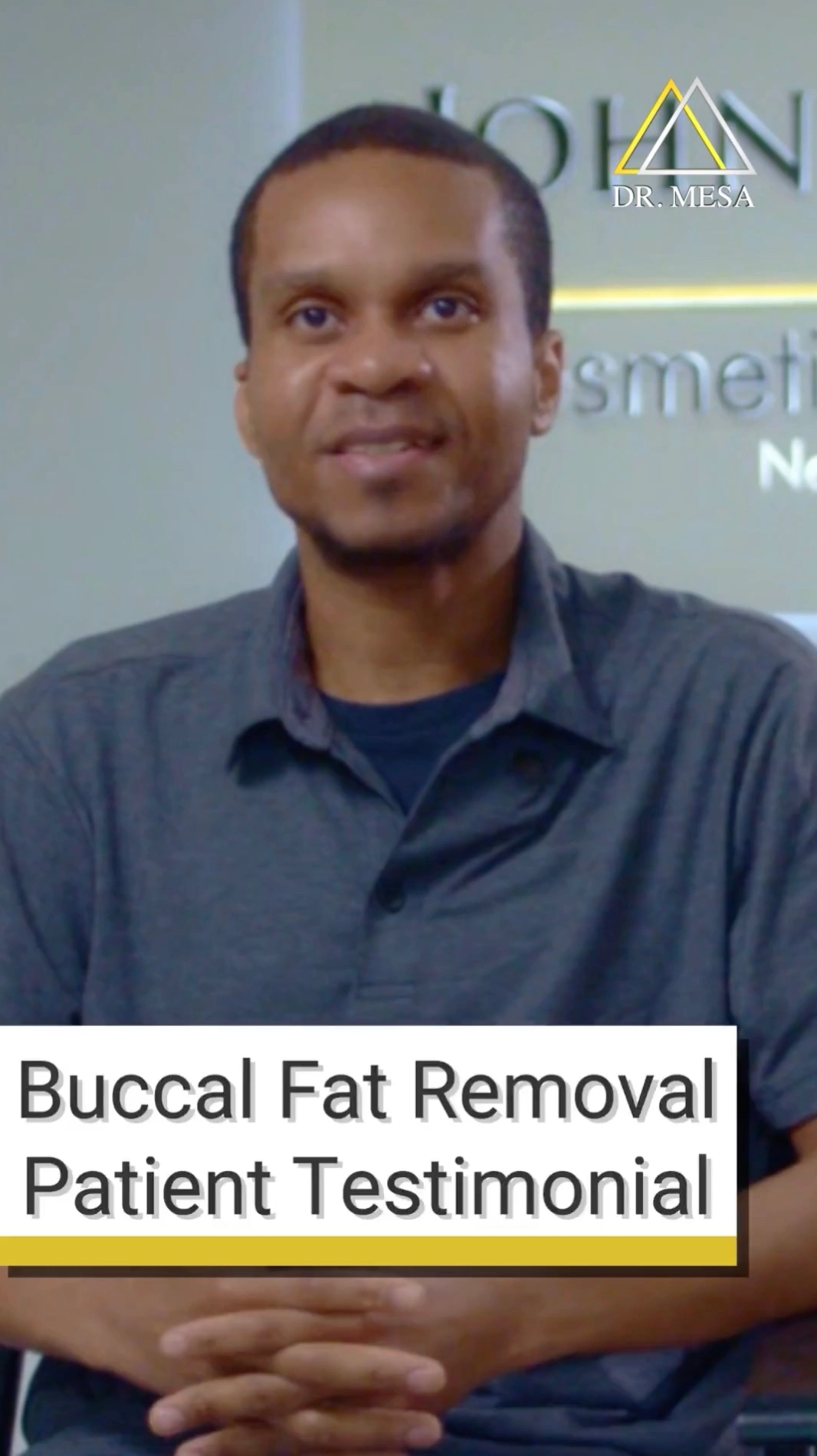
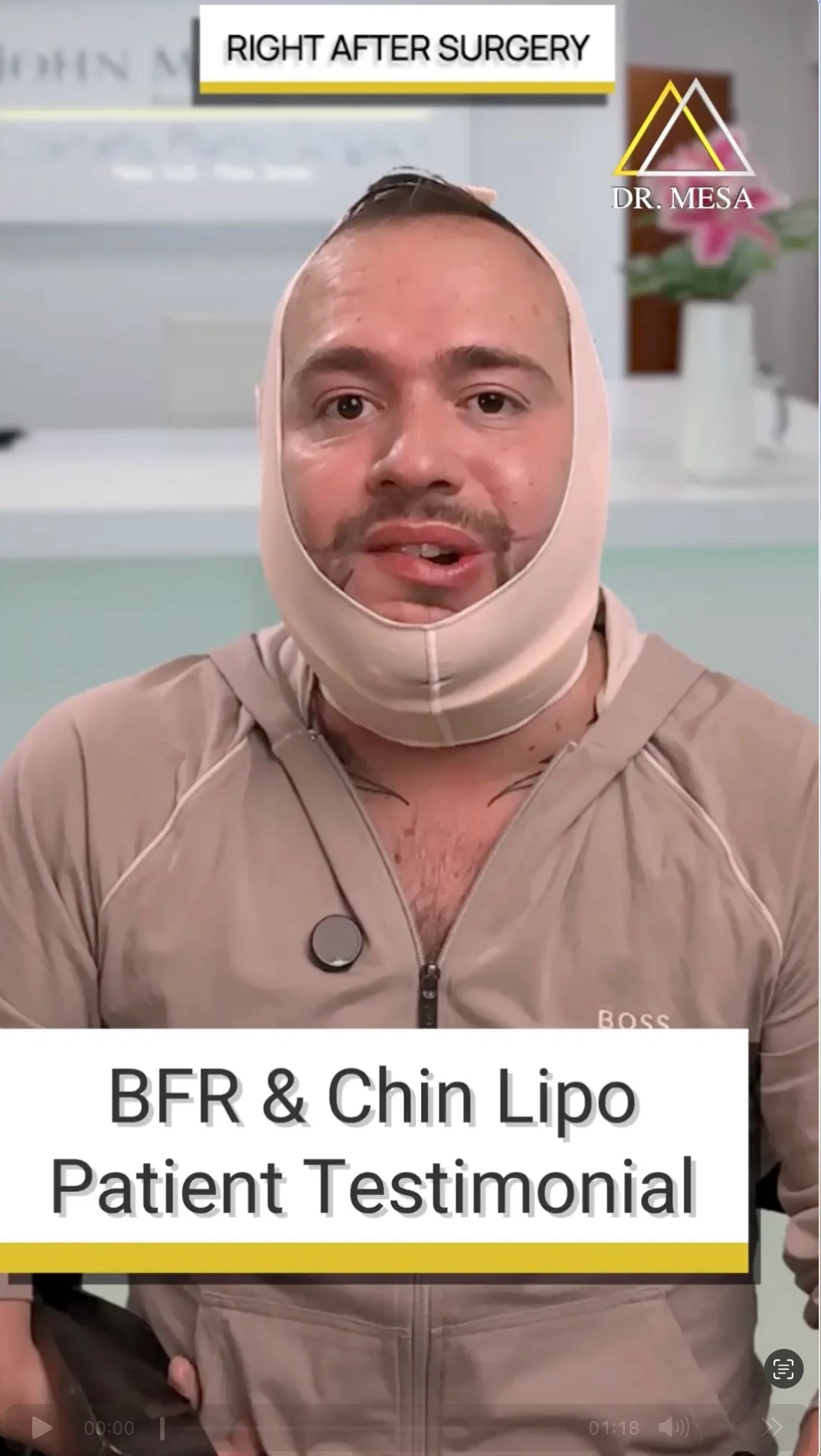
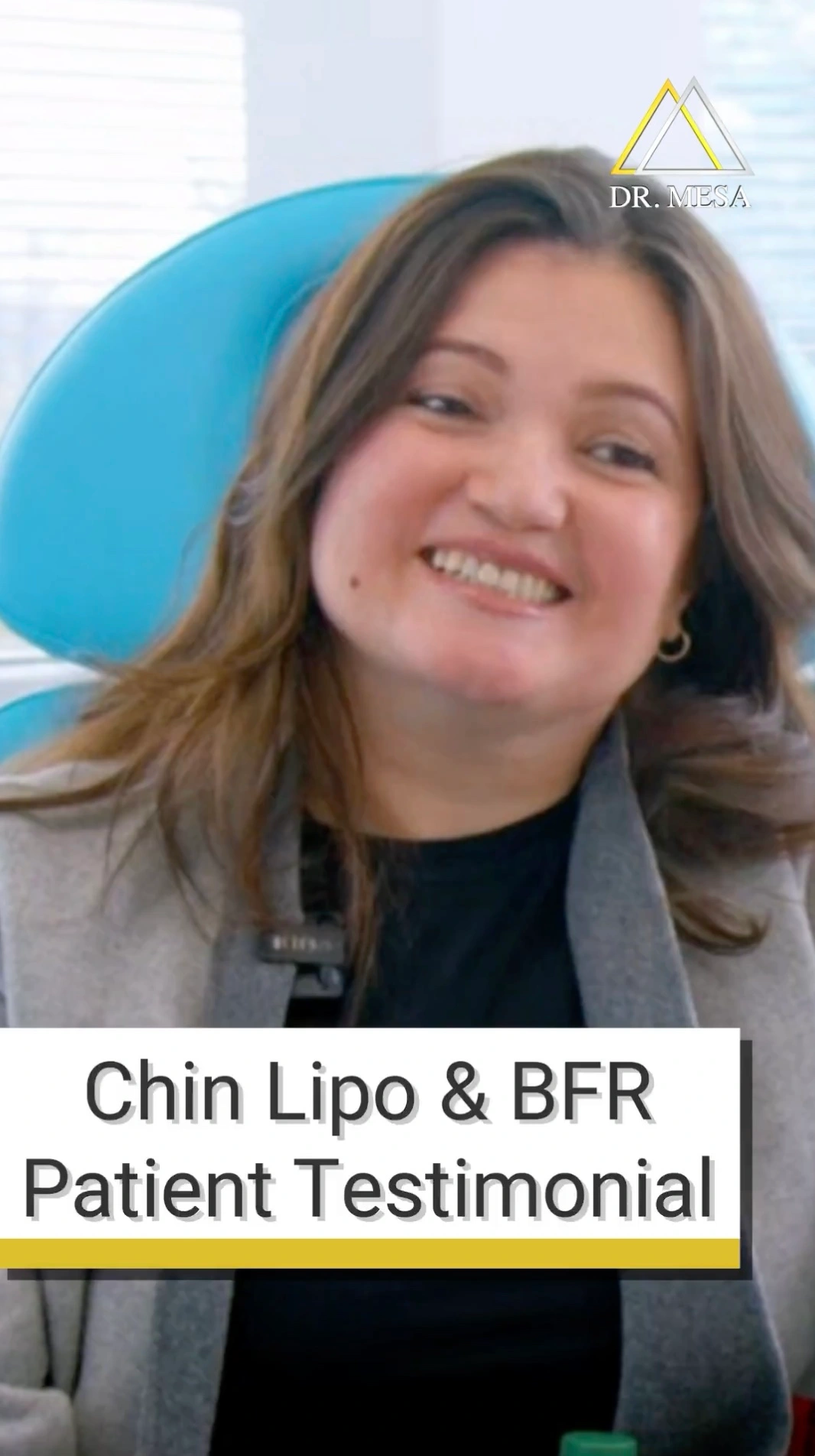
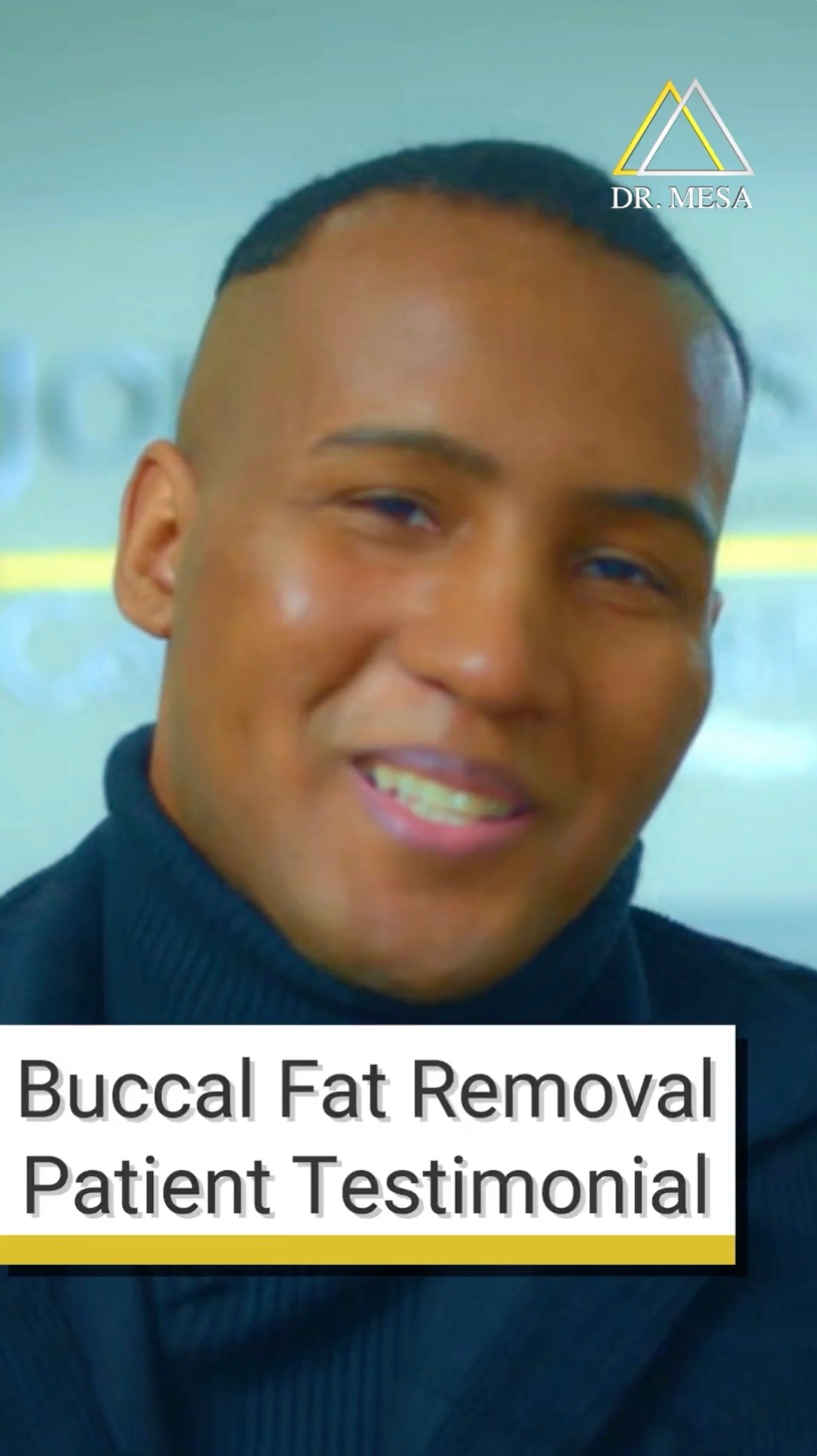
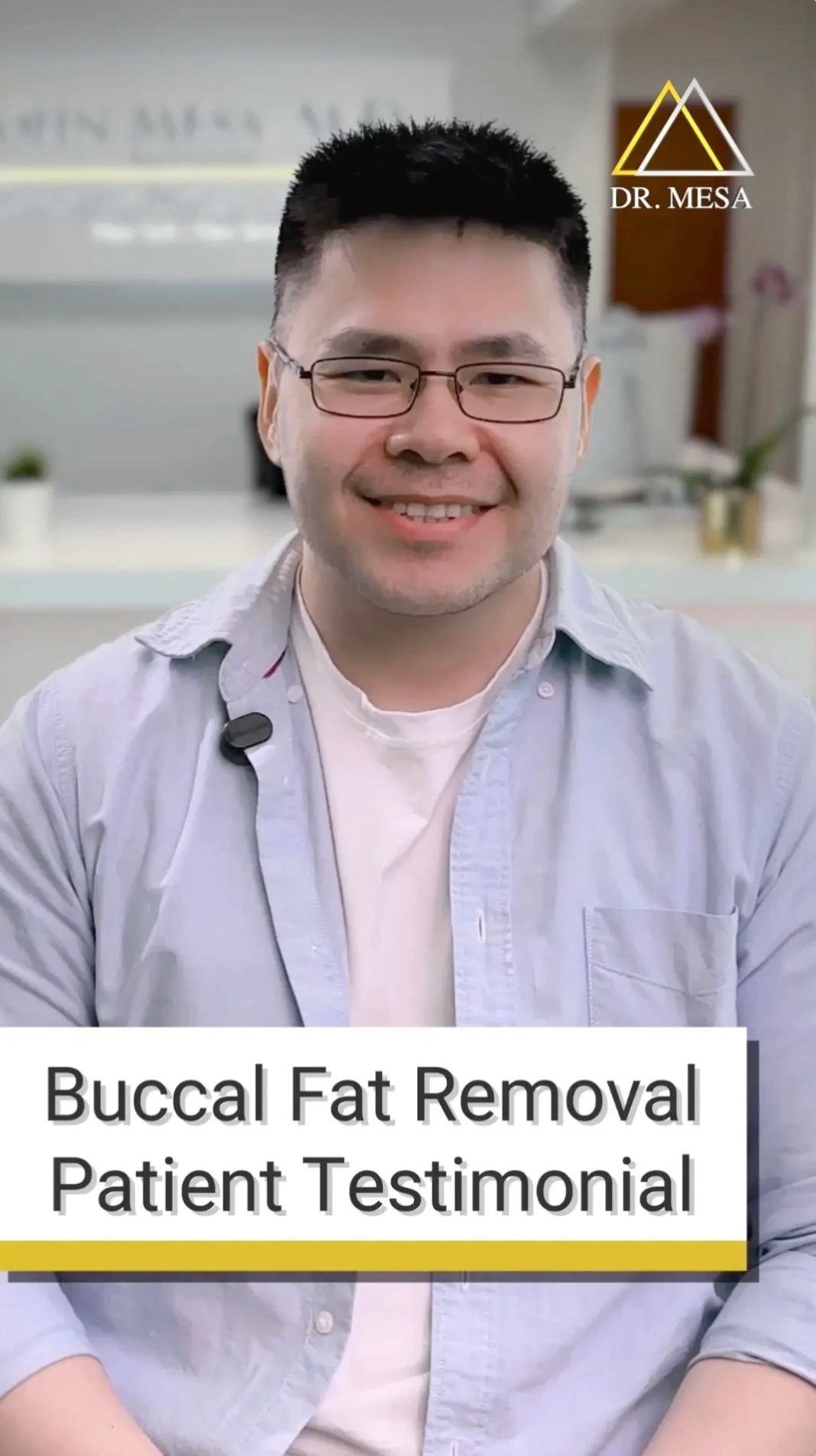

That search led me to Dr. Mesa, and from my very first conversation with Cristina, I felt like I had found the right place. We talked about my goals and what I was hoping to achieve, and she assured me that Dr. Mesa was a great fit. I was nervous and had A LOT of questions leading up to my appointment, and Cristina was always there, always quick to respond, and never once made me feel like I was a bother. She really put me at ease.
The office is beautiful and feels much more like an elegant Upper East Side pied-à-terre than a medical office, which somehow makes the whole experience even more inviting.
Jose greeted me by name when I arrived and made the intake process completely seamless. Then there was Alex, who was exactly what I needed. Warm, funny, open, and completely genuine. He made me feel immediately comfortable, shared his own experience and results, and kept me laughing while making sure I knew I was in very good hands. His results were so natural that I remember thinking, okay, I am definitely in the right place.
And then there was Dr. Mesa. He is the consummate professional: incredibly knowledgeable, patient, thorough, and very much a teacher. He explained the process, the product, and what was realistic, while also pushing me just a little when he knew the result would be worth it. His competence and confidence were the perfect antidote to my nerves. Quite literally, exactly what the doctor ordered.
The procedures were fast and painless, and the entire team was incredibly supportive. In the course of about an hour, they managed to lift not only my jowls, but my spirits and my confidence, too. They told me to give it about two weeks before judging the final result.
They were not wrong.
I am absolutely over the moon. Dr. Mesa took years off my appearance in a way that is subtle, natural, and completely undetectable. I look like me, just fresher and better rested. I couldn't be happier and have already booked my follow-up appointments.
My only complaint is that I have to wait three months to see them again.
If you're looking for a provider and feeling even a little nervous, I genuinely can't say enough good things about this team. I felt cared for, listened to, reassured, and completely confident from the first phone call through the moment I walked out the door.
Run, don't walk. You will not be disappointed.


The office manager and receptionist were pleasant and that’s where I give the one star.
Summary: the client is not important here. It appears to be for online image.
Not for a mature sophisticated client. Go elsewhere.

The entire Miami staff was amazing , from start to finish. We couldn’t have asked for a better experience. HIghly Recommend.


Before my appointment, photos were taken, and I was then escorted to a private room where Dr. Mesa personally went through my medical history with me. He was incredibly attentive, listened to everything I had to say, and took the time to explain everything thoroughly. What really impressed me was how detailed his assessment was. He carefully examined my face and had me make different facial expressions so he could see exactly how and where my wrinkles were appearing. He then used a diagram to walk me through each treatment area and explained exactly how many units of Botox he planned to use. I really appreciated knowing what he was doing and why.
The entire experience was also incredibly relaxing. His assistant brought in some aromatherapy, which was such a thoughtful touch, along with the Botox and ice packs. Dr. Mesa came back shortly afterward to begin the treatment, and I was honestly amazed at how gentle his hand was. Ice packs were used around my crow’s feet and glabella areas, which made the process even more comfortable.
Afterward, Dr. Mesa explained that I should see my full results in about five days and told me that if I felt I needed a touch-up, I could simply call and they would get me back in. That level of care and follow-through really stood out to me.
I also received an amazing introductory price, but I was pleasantly surprised to learn that their regular pricing is very reasonable for the area as well.
I couldn’t be happier with my experience and would highly recommend Dr. Mesa to anyone considering Botox. He is knowledgeable, thorough, gentle, and genuinely takes the time to make you feel comfortable and confident in your treatment. The entire team was fantastic, and I’m so glad I found Dr. Mesa!


Also the staff is patient and knowledgeable!










Why Choose Dr. John Mesa for Buccal Fat Removal?
Under Dr. John Mesa’s care, you can expect a different kind of experience: measured, precise, and fully dedicated to achieving results that align with your anatomy and goals.
That philosophy shapes every consultation, every surgical plan, and every incision. It is not about performing a procedure. It is about making the right decision for each individual patient, and executing it with intention.
Dr. Mesa is a Harvard-trained, triple-fellowship-trained, board-certified plastic surgeon with residency training at Harvard-affiliated institutions including Massachusetts General Hospital and Brigham and Women’s Hospital, as well as Penn State University. He holds triple fellowship training in craniofacial surgery, aesthetic surgery, and plastic surgery research, representing 12 continuous years of postgraduate surgical training. His practice is devoted exclusively to plastic surgery of the face, not as one offering among many, but as the singular focus of his career. When a surgeon operates only on the face, the level of refinement that follows is difficult to replicate in a generalist setting.
Over 16 years of clinical practice and more than 2,000 five-star reviews across Google and RealSelf reflect what patients consistently experience: a process that is calm, thorough, and oriented toward long-term results. Dr. Mesa has authored published articles and book chapters that contribute to the advancement of plastic surgery and has been recognized annually as a Top Doctor by NY Top Docs from 2023 through 2026. From January through October 2024, he received the most new reviews on RealSelf of any doctor nationwide and currently ranks second in new before-and-after photos submitted to the platform across all doctors in the country.
His three practice locations, New York City, New Jersey, and Miami, serve patients who travel for a specific standard of care rather than settling for proximity alone.
One aspect of Dr. Mesa’s surgical approach that reflects his confidence in precision: buccal fat removal is performed under local anesthesia. This is not the standard in every practice. It requires a surgeon who is comfortable working with complete control, without the “safety net” of general anesthesia or IV sedation, and a patient who has been properly prepared and selected. It is a detail that signals the level of discipline applied throughout the entire process.
Patients do not choose Dr. Mesa because of marketing. They choose him because the results, consistently documented and independently reviewed, speak for themselves.
Why Choose Dr. John Mesa for Buccal Fat Removal?
Under Dr. John Mesa’s care, you can expect a different kind of experience: measured, precise, and fully dedicated to achieving results that align with your anatomy and goals.
That philosophy shapes every consultation, every surgical plan, and every incision. It is not about performing a procedure. It is about making the right decision for each individual patient, and executing it with intention.
Dr. Mesa is a Harvard-trained, triple-fellowship-trained, board-certified plastic surgeon with residency training at Harvard-affiliated institutions including Massachusetts General Hospital and Brigham and Women’s Hospital, as well as Penn State University. He holds triple fellowship training in craniofacial surgery, aesthetic surgery, and plastic surgery research, representing 12 continuous years of postgraduate surgical training. His practice is devoted exclusively to plastic surgery of the face, not as one offering among many, but as the singular focus of his career. When a surgeon operates only on the face, the level of refinement that follows is difficult to replicate in a generalist setting.
Over 16 years of clinical practice and more than 2,000 five-star reviews across Google and RealSelf reflect what patients consistently experience: a process that is calm, thorough, and oriented toward long-term results. Dr. Mesa has authored published articles and book chapters that contribute to the advancement of plastic surgery and has been recognized annually as a Top Doctor by NY Top Docs from 2023 through 2026. From January through October 2024, he received the most new reviews on RealSelf of any doctor nationwide and currently ranks second in new before-and-after photos submitted to the platform across all doctors in the country.
His three practice locations, New York City, New Jersey, and Miami, serve patients who travel for a specific standard of care rather than settling for proximity alone.
One aspect of Dr. Mesa’s surgical approach that reflects his confidence in precision: buccal fat removal is performed under local anesthesia. This is not the standard in every practice. It requires a surgeon who is comfortable working with complete control, without the “safety net” of general anesthesia or IV sedation, and a patient who has been properly prepared and selected. It is a detail that signals the level of discipline applied throughout the entire process.
Patients do not choose Dr. Mesa because of marketing. They choose him because the results, consistently documented and independently reviewed, speak for themselves.
Before and After Buccal Fat Removal
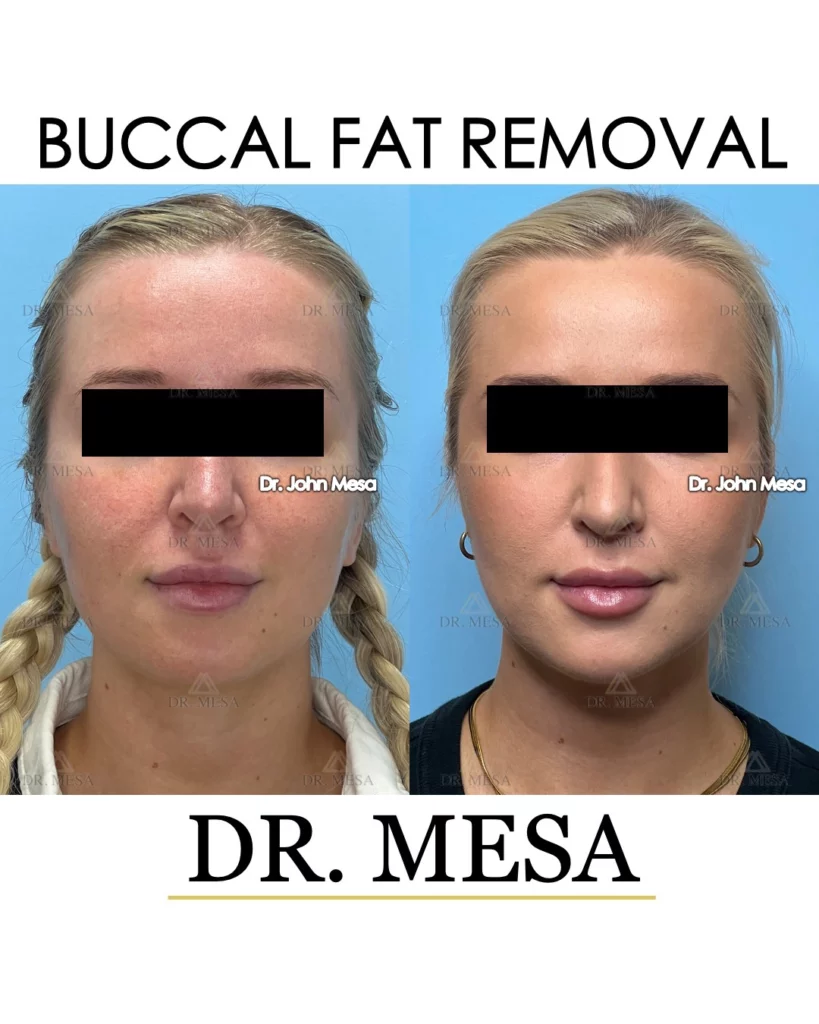
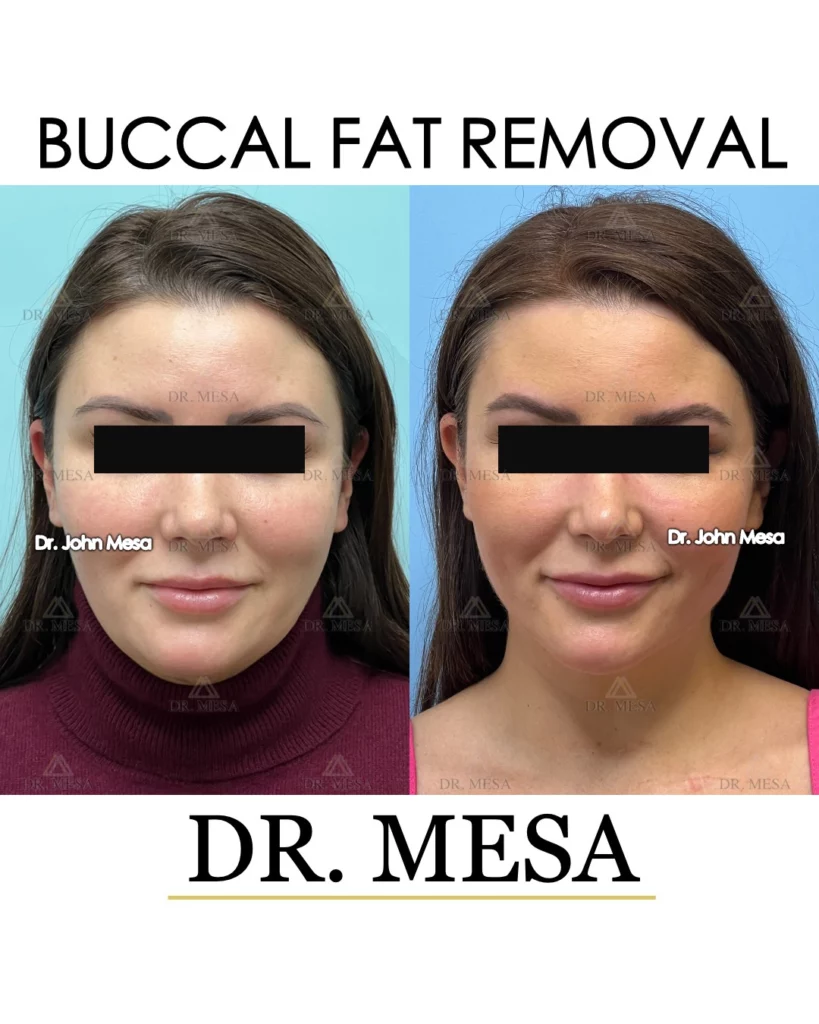
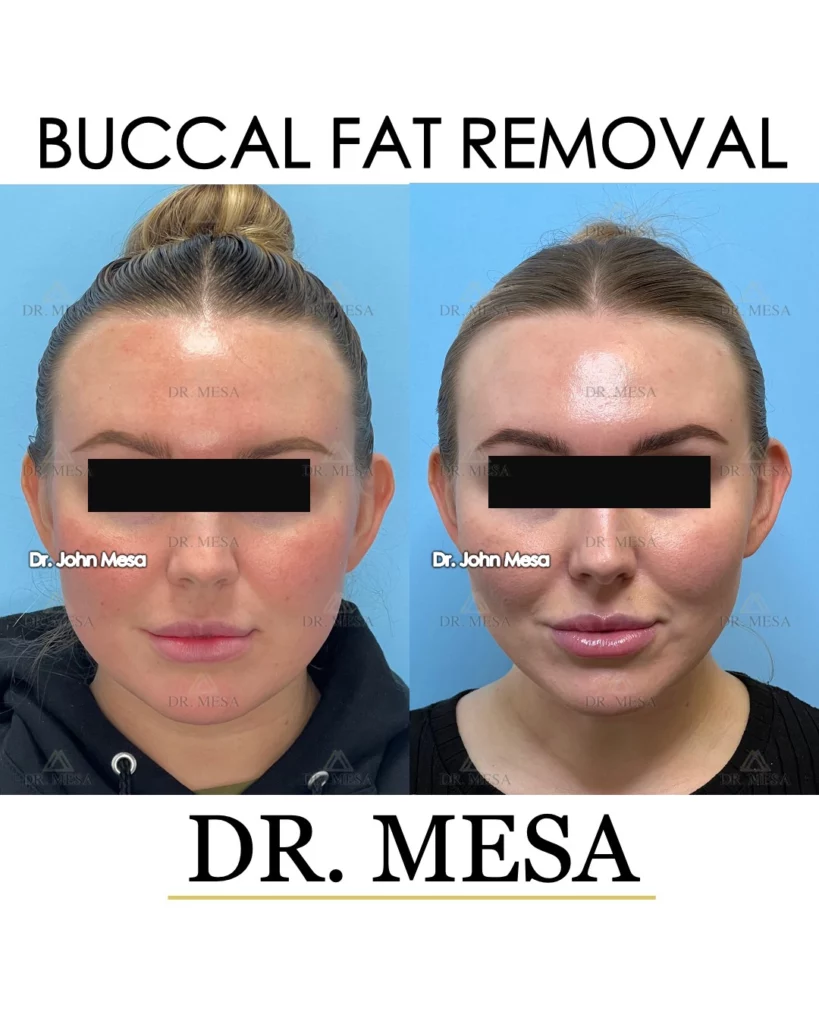
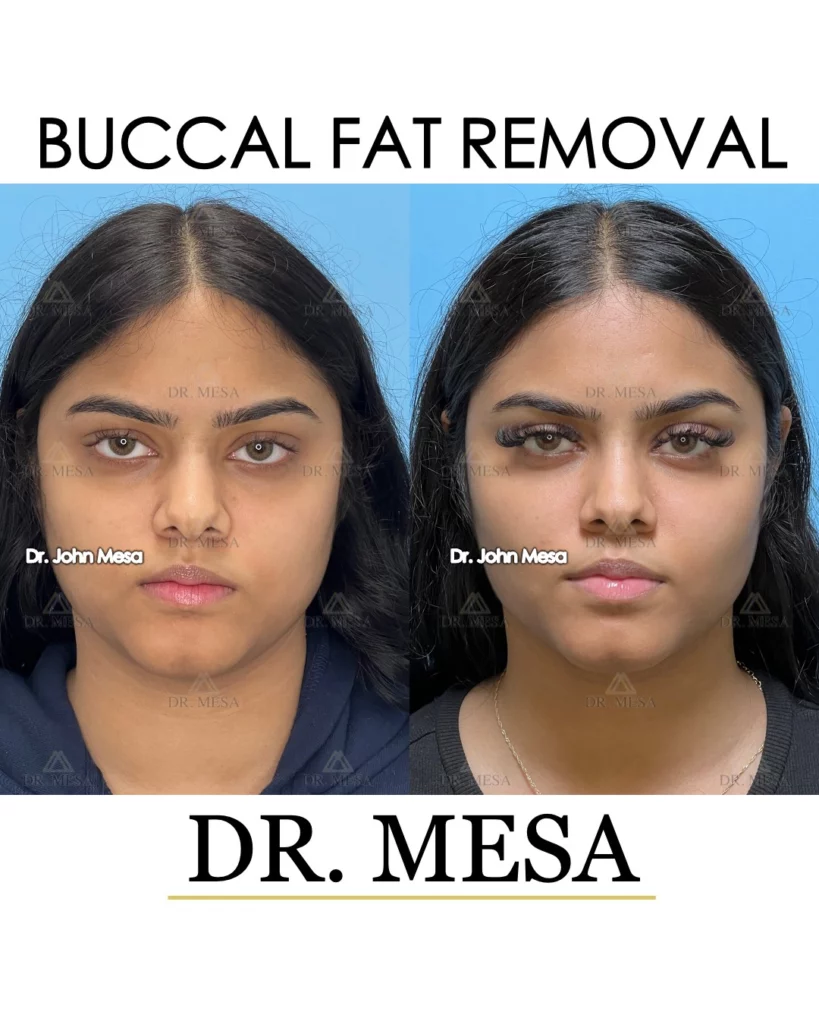
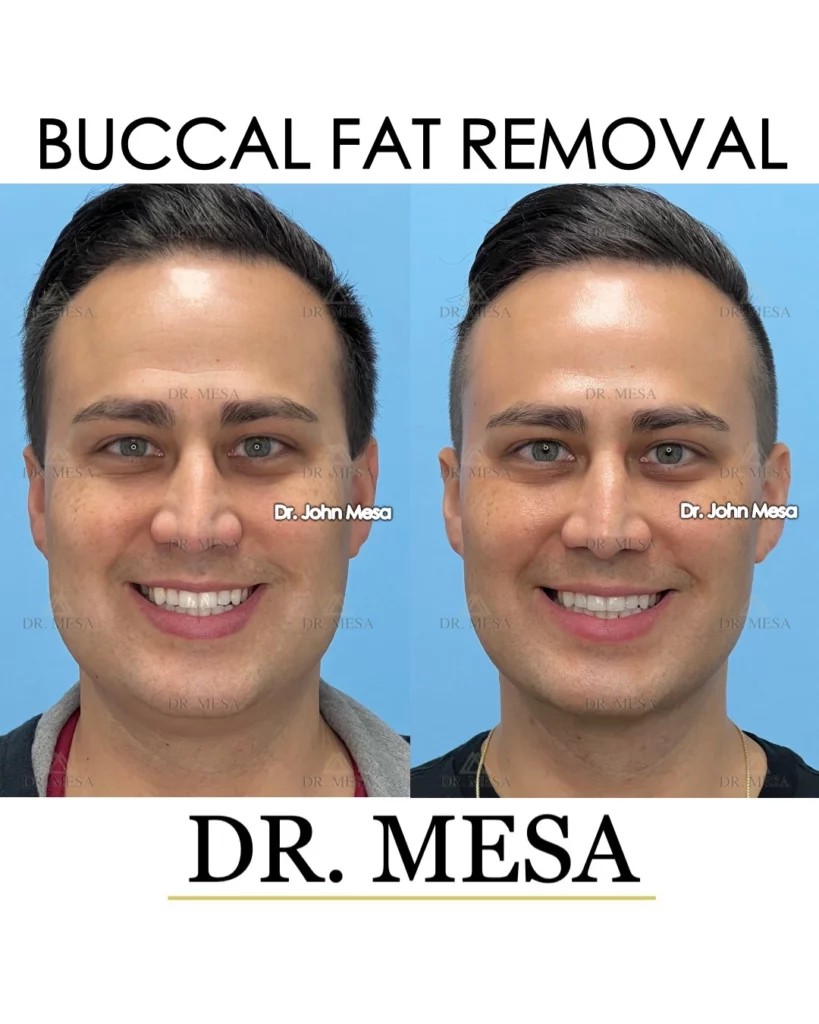
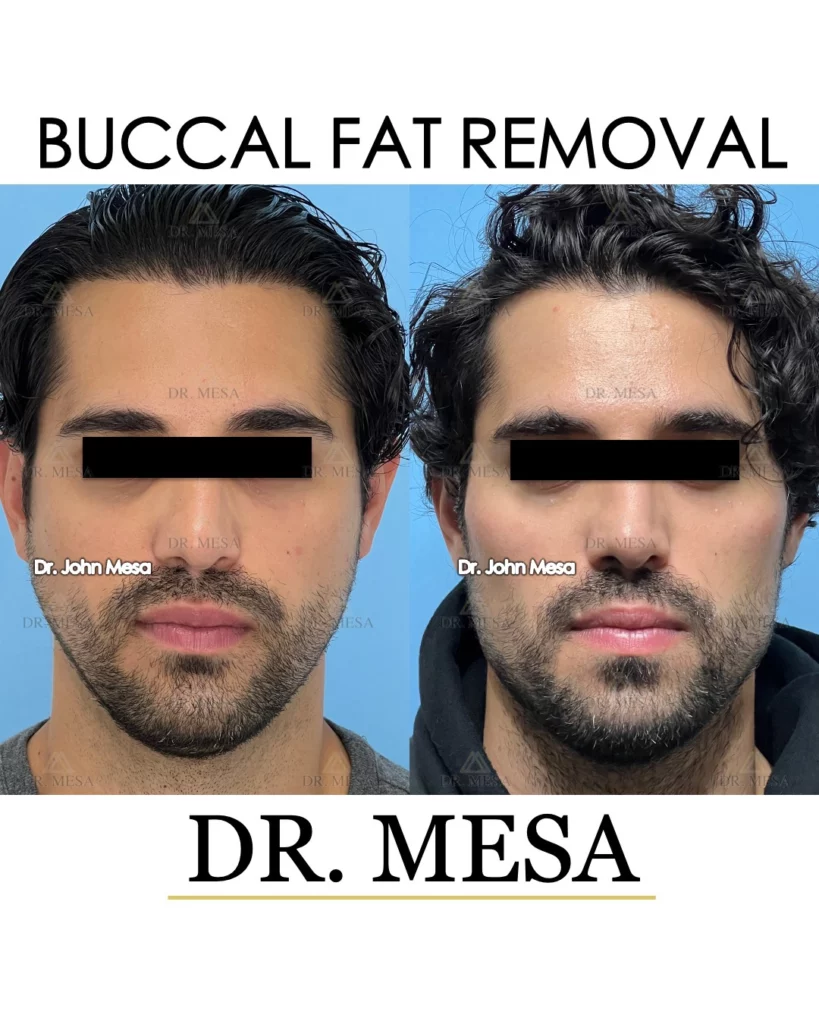
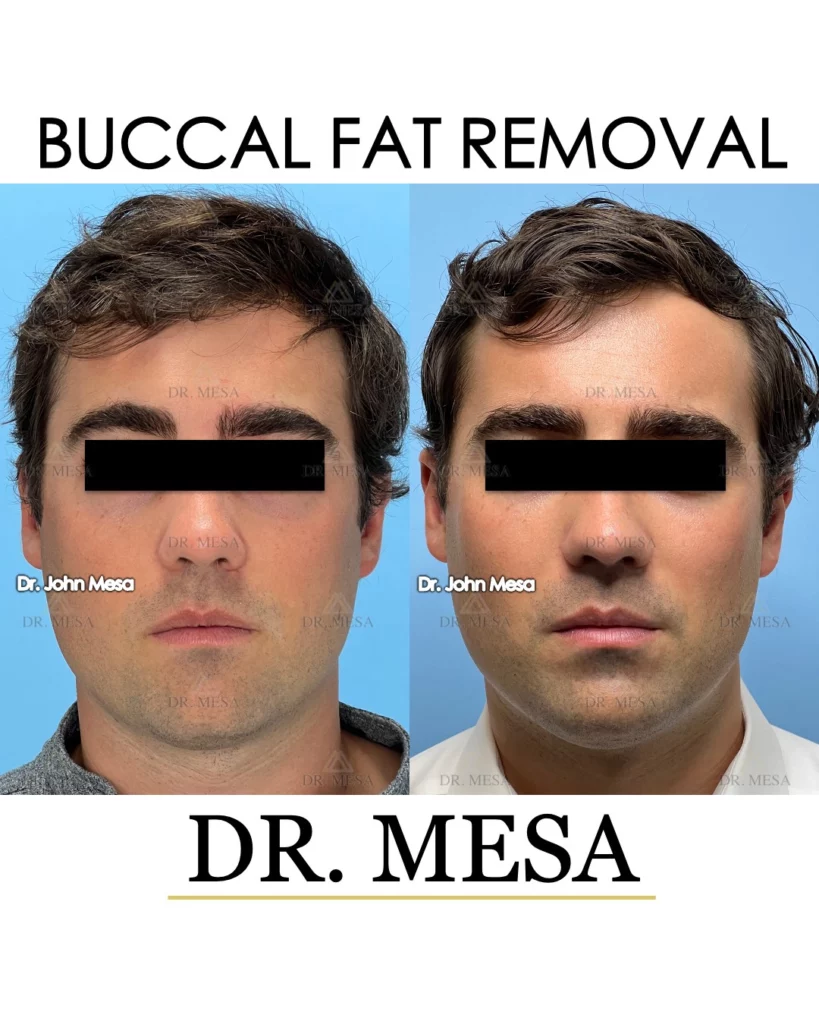
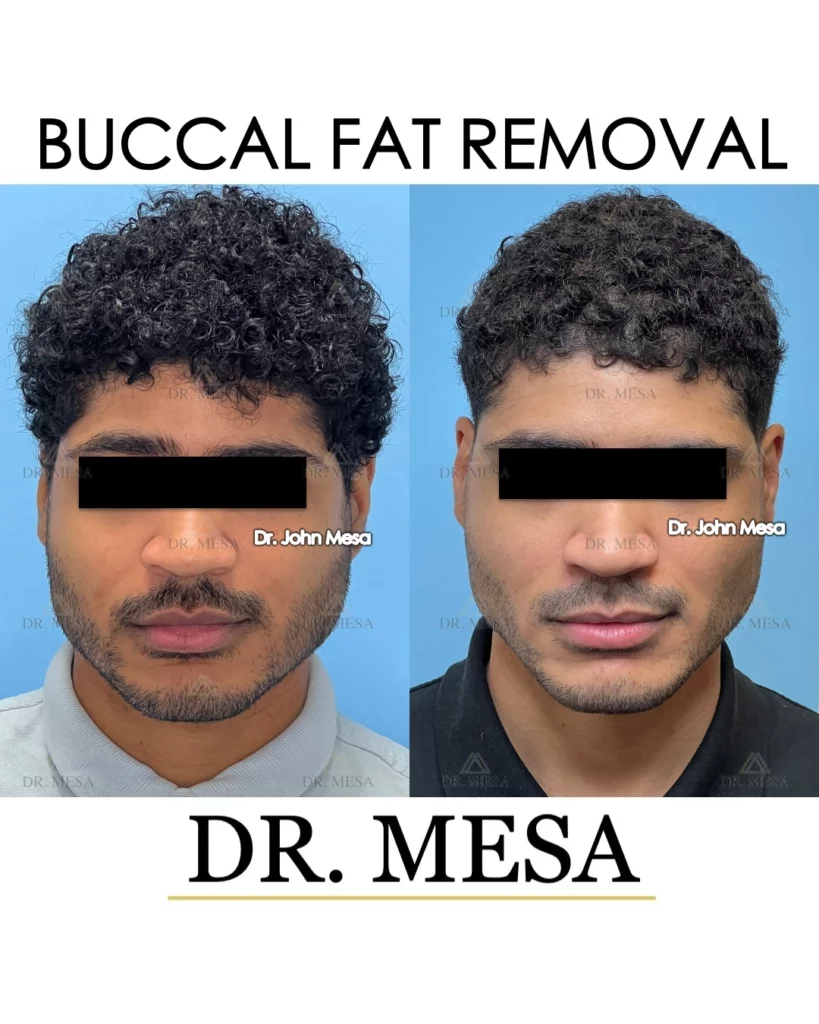
Before-and-after photography is the most direct form of accountability in cosmetic surgery. It does not require interpretation. Either the results are consistent, balanced, and natural, or they are not.
When reviewing buccal fat removal photos, look for facial harmony above all else. The goal of the procedure is proportional refinement, not a dramatic transformation. Results that appear natural, with midface contour that complements the surrounding features, reflect a surgical plan that was built around the patient’s anatomy rather than a single aesthetic target.
The cases documented below include both male and female patients across a range of ages and backgrounds. All “after” photographs were taken three months post-procedure, when most swelling has resolved and the final results have fully settled.
Dr. Mesa currently ranks second in new before-and-after photos submitted to RealSelf nationwide, across all physicians and all procedures.
Buccal Fat Removal Before & After Photos
Long-Term Results and Aging After Buccal Fat Removal
The most common concern patients raise before buccal fat removal is not the procedure itself. It is what happens decades later. Will I look gaunt? Will I appear older than I should? Will removing volume now mean I have too little later?
These are the right questions to ask. The answers depend almost entirely on one factor: whether the patient was the right candidate to begin with.
The hollowed or gaunt appearance that has been associated with buccal fat removal is not caused by the passage of time. It is caused by performing the procedure on a patient whose facial structure does not support it, specifically, a patient who lacks adequate cheekbone definition. When buccal fat is removed without a strong skeletal foundation, the lower face can appear depleted rather than sculpted. That outcome is a failure of selection, not a failure of the procedure.
This does not mean that only patients with significant buccal fat excess are candidates. Celebrities and supermodels frequently undergo buccal fat removal not because they carry excessive volume, but because even a modest reduction produces the chiseled, camera-ready contour their profession demands. What makes them appropriate candidates is not the amount of fat removed. It is the cheekbone structure that supports the result.
In patients who have genuine excess volume in the buccal fat pad, confirmed through careful clinical evaluation, results age naturally. The face maintains its proportions. Facial harmony is preserved. The contours that were refined surgically remain consistent with the patient’s overall facial structure as they grow older.
It is also worth understanding what natural aging actually does to the face, because the common assumption is wrong.
Over time, the midface undergoes gradual changes. One of the most significant is loss of cheekbone definition, the bony structure that provides facial framework. This process typically begins around age 35 and occurs in every patient.
In the lower face, however, the opposite of what most people believe takes place. The lower face does not become thinner with age. In most patients, the lower face gains volume over the years. This is particularly evident in the United States, where dietary and lifestyle factors contribute to facial weight gain as patients age, but the same trend is increasingly common in Europe and globally. The era in which patients routinely became thinner with age has largely passed. Modern diets and sedentary patterns mean that most patients carry more volume in the lower face at 50 than they did at 30. This age-related increase in lower facial volume causes the face to become rounder, heavier, and more jowly over time.
This is a critical distinction. The widespread misconception that the face loses volume with age leads many patients to hesitate, fearing they will look gaunt decades after buccal fat removal. In reality, the lower face tends to accumulate volume, not lose it. Patients who delay or avoid the procedure based on this misconception often struggle for years with a round, full lower face while wanting the sculpted, V-shaped facial contour they could have achieved. This is one of the reasons Dr. Mesa performs buccal fat removal regularly on patients in their 50s, 60s, and even 70s.
Buccal fat pads do not regenerate. The reduction is permanent. This is precisely why patient selection and surgical judgment carry more weight in this procedure than almost any other facial contouring operation.
Dr. Mesa has patients whose results span over a decade. Those patients maintain natural, balanced facial contours. Their faces have continued to age normally, without the gaunt or skeletal appearance that concerns prospective patients who have read broadly about the procedure.
Selection determines outcome. Not the passage of time.
Why is a “V-shaped” Face a Universal Standard of Attraction?
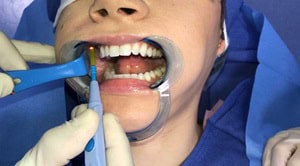
Human attraction has been the subject of many scientific studies. Across all cultures, a V-shaped face is considered the ideal — however, not everyone is lucky enough to be born with this trait. Many ethnicities have a rounder facial look. A V-shape, or V-line facial structure, is a slim, oval face shape that narrows to the chin, along with a defined jawline. The human eye recognizes this facial shape as being attractive both in men and women. If you inherited a rounded face and want to achieve a more structured, chiseled look, buccal fat pad removal in NYC may be the ideal procedure for you. The procedure, when performed by Dr. Mesa, is fast and painless. These images will provide you with an idea of what to expect:
Can I Add Other Procedures to My Buccal Fat Removal?
Buccal fat pad removal can be combined with various other cosmetic procedures. Dr. Mesa usually performs cheek augmentation with soft tissue fillers (like Voluma) to enhance the results of the buccal fat removal surgery. Other cosmetic plastic surgery procedures such as a facelift, chin liposuction, neck liposuction, eyelid lift (blepharoplasty) facial skin tightening, or other treatments can be performed at the same time.
When you’re under the care of Dr. Mesa, he performs a thorough evaluation of your facial structure, and may recommend added procedures to help you achieve your aesthetic goals. However, he will never pressure you to undergo a surgery or procedure you don’t need, which often occurs in other surgical practices. You may choose to undergo additional treatments during your buccal fat removal, including enhancing your cheekbone size with dermal fillers or implants or surgically crafting a more defined jawline.
Buccal Fat Removal Frequently Asked Questions
In New York City, the cost of buccal fat removal at a reputable and qualified surgeon is typically between $5,000 and $10,000. Buccal fat removal surgery usually takes around 30 to 45 minutes and is done under local anesthesia. This procedure and speed keeps the costs of the surgery lower than a surgery done with overnight care and general anesthesia.
In the great majority of patients, well over 90%, buccal fat does not meaningfully decrease with diet or exercise. Buccal fat pads are a distinct anatomical structure, separate from the subcutaneous fat that typically responds to weight loss and physical conditioning. They are encapsulated, deep fat compartments that tend to remain stable in size even when overall body fat is reduced, so most people will not see a noticeable change in their buccal fat pads from dieting or working out alone.
No. Buccal fat pads do not regenerate. Once removed, the result is permanent. Patients may notice gradual changes in facial appearance over time due to normal aging, but the volume reduction from buccal fat removal is lasting.
These procedures address entirely different anatomical structures. Buccal fat removal targets the buccal fat pads, which are encapsulated, deep compartments of fat located beneath the facial muscles. Cheek liposuction targets superficial subcutaneous fat just beneath the skin. The appropriate procedure depends on which structure is contributing to fullness in a given patient. In some cases, both may be addressed. Anatomy dictates the plan.
Not when performed on the right candidate. The gaunt or prematurely aged appearance that some associate with buccal fat removal is not caused by the procedure itself. It is caused by performing it on the wrong candidate: usually a patient who lacks adequate cheekbone structure. Cheekbones are the foundation of the face. Without that foundation, removing buccal fat can leave the lower face looking hollow rather than sculpted.
When cheekbone structure is present, results age naturally and maintain facial harmony over time. For patients who desire the procedure but lack sufficient cheekbone definition, Dr. Mesa can build the foundation first through cheekbone enhancement, typically with filler, before proceeding with buccal fat removal.
It is also worth noting that the lower face does not lose volume with age, as many patients assume. In most patients, the lower face actually gains volume over the years, becoming rounder and heavier. The concern that buccal fat removal will leave you looking gaunt decades later is based on a misconception about how the face ages.
In Dr. Mesa's practice, buccal fat removal is performed on patients from 18 years of age through the mid-70s. Age alone does not determine candidacy. The determining factors are cheekbone structure, the presence of buccal fat pad prominence, and the patient's aesthetic goals.
In select cases, patients as young as 16 or 17 who have reached skeletal maturity may also be candidates, with appropriate parental consent. These cases are evaluated individually and require the same anatomical criteria as any other candidate.
The widely cited recommendation to wait until the mid-20s is based on the assumption that facial fat distribution has not fully matured before that age. In Dr. Mesa's experience, this generalization does not reflect clinical reality for every patient. When the anatomy supports the procedure, the results are predictable regardless of whether the patient is 18 or 75.
Buccal fat removal is a painless procedure when performed under local anesthesia by Dr. Mesa. Most patients report either no discomfort at all or mild discomfort limited to the day of the procedure or the day after, managed entirely with over-the-counter pain medication. Many patients require no pain medication whatsoever. Beyond the first day, pain is not a factor in the recovery process.
No. Dr. Mesa performs buccal fat removal under local anesthesia without sedation. Patients remain fully alert throughout the procedure and can drive themselves home afterward. This also means the procedure can be scheduled with complete privacy, without needing to involve anyone else.
Initial slimming of the midface becomes visible at approximately three weeks, as the majority of swelling resolves. Final results are typically apparent at three months, once all residual swelling has cleared and the tissues have settled into their new position.
Yes. Buccal fat removal is frequently performed alongside other procedures to achieve comprehensive facial refinement. Common combinations include cheek augmentation with fillers, chin liposuction, neck liposuction, facelift, blepharoplasty, and facial skin tightening treatments. The appropriate combination depends on each patient's anatomy and goals, and is determined during consultation.
No. Buccal fat removal is a cosmetic procedure and is not covered by insurance. Financing options are available through CareCredit and Alphaeon Credit for patients who prefer to manage the cost over time.
No. All incisions are made inside the mouth, through the inner cheek. There are no external incisions and no visible scarring. The internal incisions heal well and are not visible to others.
When performed by a qualified, board-certified plastic surgeon, complications are uncommon. As with any surgical procedure, risks exist and include infection, injury to a branch of the facial nerve, or injury to the parotid duct. These complications are rare when the procedure is performed by a surgeon who specializes in it. As with any operation, there is a meaningful difference between a surgeon who performs a procedure occasionally and one whose practice is focused on it. A thorough consultation and pre-operative evaluation are part of ensuring both candidacy and safety.
Most patients who work from home return to work the following day. Patients who need to be present in the workplace typically return within two to three days. After that point, the face appears normal, and most people will not notice anything different for the first three weeks. Results begin to become visible around the three-week mark as swelling resolves and the contour starts to emerge. Final results are fully evident at three to four months.
Buccal Fat Removal in New York City, New Jersey, and Miami
Dr. Mesa performs buccal fat removal at three locations: New York City, New Jersey, and Miami. Patients throughout the Northeast and South Florida choose to consult at whichever location is most convenient, with many traveling specifically for the procedure regardless of proximity to any one office. For out-of-state patients or those who prefer not to commute or travel for an initial visit, consultations can also be conducted virtually via video call.
The same surgeon, the same technique, and the same standards apply at every location. There is no variation in protocol between offices. Whether a patient consults in Manhattan, across the Hudson, or in Miami, they are evaluated and treated by Dr. Mesa personally.
Consultations are available at all three locations. For patients searching for buccal fat removal in NYC, buccal fat removal in New Jersey, or buccal fat removal in Miami, each office provides the full range of evaluation, planning, and treatment.
Learn more about buccal fat removal in Miami or buccal fat removal in New Jersey.
Verified Customer Reviews
- I spent quite a bit of time looking for the right doctor because I knew exactly what I wanted, and what I definitely did not want. I wanted to look refreshed and a little younger, but still completely like myself. Natural, subtle, and, most importantly, undetectable. I wanted people to think, “You look great,” not “You had work done.”
That search led me to Dr. Mesa, and from my very first conversation with Cristina, I felt like I had found the right place. We talked about my goals and what I was hoping to achieve, and she assured me that Dr. Mesa was a great fit. I was nervous and had A LOT of questions leading up to my appointment, and Cristina was always there, always quick to respond, and never once made me feel like I was a bother. She really put me at ease.
The office is beautiful and feels much more like an elegant Upper East Side pied-à-terre than a medical office, which somehow makes the whole experience even more inviting.
Jose greeted me by name when I arrived and made the intake process completely seamless. Then there was Alex, who was exactly what I needed. Warm, funny, open, and completely genuine. He made me feel immediately comfortable, shared his own experience and results, and kept me laughing while making sure I knew I was in very good hands. His results were so natural that I remember thinking, okay, I am definitely in the right place.
And then there was Dr. Mesa. He is the consummate professional: incredibly knowledgeable, patient, thorough, and very much a teacher. He explained the process, the product, and what was realistic, while also pushing me just a little when he knew the result would be worth it. His competence and confidence were the perfect antidote to my nerves. Quite literally, exactly what the doctor ordered.
The procedures were fast and painless, and the entire team was incredibly supportive. In the course of about an hour, they managed to lift not only my jowls, but my spirits and my confidence, too. They told me to give it about two weeks before judging the final result.
They were not wrong.
I am absolutely over the moon. Dr. Mesa took years off my appearance in a way that is subtle, natural, and completely undetectable. I look like me, just fresher and better rested. I couldn't be happier and have already booked my follow-up appointments.
My only complaint is that I have to wait three months to see them again.
If you're looking for a provider and feeling even a little nervous, I genuinely can't say enough good things about this team. I felt cared for, listened to, reassured, and completely confident from the first phone call through the moment I walked out the door.
Run, don't walk. You will not be disappointed.Read MoreRead Less Bryan Luterman10/01/2026
 - Getting this procedure done helped with my tmj tension and facial symmetry so much! Not only do I feel more confident, but my face is so much more comfortable. I would say my quality of life has genuinely improved!Read MoreRead LessMary Grace Sullivan10/01/2026
- I had a great experience with Cristina and Dr, Mesa getting cheek and chin fillers with a buccal fat removalRead MoreRead LessBryan Clark9/23/2026
- Excellent Professional Dr.Mesa, The medical office is very clean and the medical assistants are excellent; I recommend this clinic 100%. Thank you.⭐️⭐️⭐️⭐️⭐️ Thank You🥰Read MoreRead Lessstaruniverse219/23/2026
- Excellent Professional Dr.Mesa, Thank You🥰Read MoreRead Lessstaruniverse219/22/2026
Schedule Your Consultation
Consultation determines everything.
Buccal fat removal is not appropriate for every patient, and the outcome in those who are candidates depends entirely on what is found during a thorough evaluation of facial anatomy. Dr. Mesa assesses each patient’s facial structure, volume distribution, skin quality, current weight, anticipated future weight loss, and long-term aging trajectory before any recommendation is made.
If you have done your research and are ready to understand whether this procedure is appropriate for your anatomy, the next step is a consultation.
Consultations are available in person in New York City, New Jersey, and Miami, as well as virtually for patients throughout the United States and around the world.
To schedule, call [phone number] or submit an inquiry through the contact form.